





The 2024 LIV Legal Awards celebrated distinguished Victorian lawyers for their outstanding achievements, exceptional service, and invaluable contributions to the LIV, the legal profession, and the community over the course of their careers.
Our Founding Principal Harry Gill was among the honorees, receiving the prestigious Distinguished Service Award alongside Tim Graham, Vasilios Kordos AccS(Fam) and Tracey Rothwell.
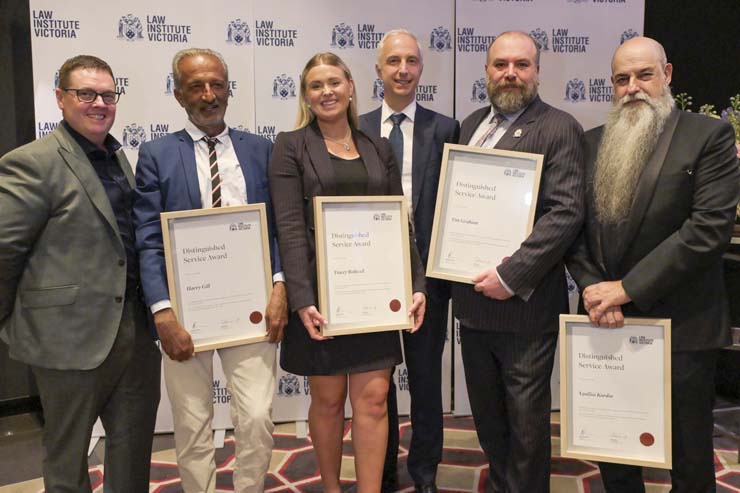
The article below originally appeared in the Law Institute Journal and News in December 2024.
Robinson Gill partner Harry Gill AccS(PI) was well into his career as a personal injury lawyer before he realised the value of joining committees at the LIV.
“In about 2001, I had a big TAC [Transport Accident Commission] case that went to verdict and was of interest to other TAC lawyers, so they invited me along to one of their dinners and, as a result, I joined the LIV’s TAC liaison group and started going to Australian Plaintiff Lawyers Association conferences [now the Australian Lawyers Alliance].”
“I met a lot of people there who encouraged me to get involved in other committees. It gave me a whole new perspective of being a lawyer. Before that, I hadn’t really felt part of the bigger legal community beyond Robinson Gill.”
Over the past 20 years, Mr Gill has been involved with the LIV’s Workers’ Compensation Committee – including as Chair in 2004–2013, when it was the LIV Accident Compensation Committee – and on the LIV Personal Injury Advisory Committee, helping set the accreditation exams.
He has also volunteered with the TAC Legal Liaison Group (2002–2004) and the Victorian WorkCover Authority (VWA) Legal Liaison Group (2007–present).
Being part of the LIV has also offered insight into how the political process works, he says. “Through the LIV, I got access to not only TAC and WorkSafe boards, but also to ministers and other politicians.”
On behalf of the LIV, Mr Gill had input into the Hanks Review, which resulted in the Accident Compensation Act 1985 (Vic) being revised into the Workplace Injury Rehabilitation and Compensation Act 2013 (Vic). Under his chairmanship, negotiations regarding the Fixed Costs model with VWA resulted in a compromise outcome for plaintiffs’ legal costs in serious injury applications.
Mr Gill also has an amendment to the WorkCover legislation named after him. The “Harry Gill amendment” ensures that ongoing weekly earnings benefits continue to be paid between the settlement of Common Law and the receipt of damages by the worker.”

How can I learn more?

Harry Gill.
Founding Principal.
Harry’s extensive career in Injury Law highlights his dedication to successful and fair outcomes for his clients.
Some other firm news you
might find helpful

Robinson Gill Lawyers Recognised in Doyle’s Guide 2026 Criminal Law Rankings
We are pleased to announce that Robinson Gill Lawyers has been recognised as a Recommended Criminal Defence Firm in Victoria in the Doyle’s Guide 2026 rankings. In addition, two members of our Crime & Advocacy team have received individual rankings for their outstanding contributions to criminal defence.
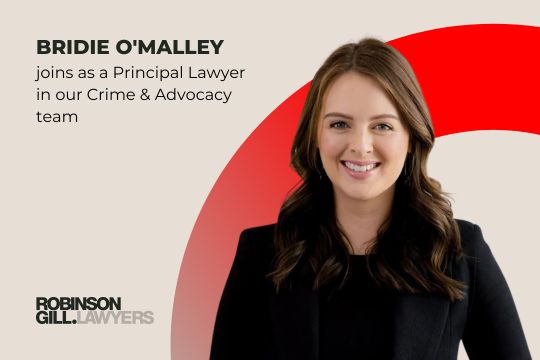
Robinson Gill Lawyers Welcomes Bridie O’Malley as Principal Lawyer in Crime & Advocacy Team
Robinson Gill Lawyers is pleased to announce the appointment of Bridie O’Malley as a Principal Lawyer in the firm’s Crime & Advocacy team.

Robinson Gill launches Asia Desk Strategy at Lunar New Year celebration
Robinson Gill Lawyers officially launched its Asia Desk Strategy on 27 February at a major Lunar New Year event attended by clients, referral partners, consultants and community leaders.